Digital Twins in Preclinical Drug Efficacy Modeling
Virtual models can now update in real time as new data arrives, replacing static predictions.

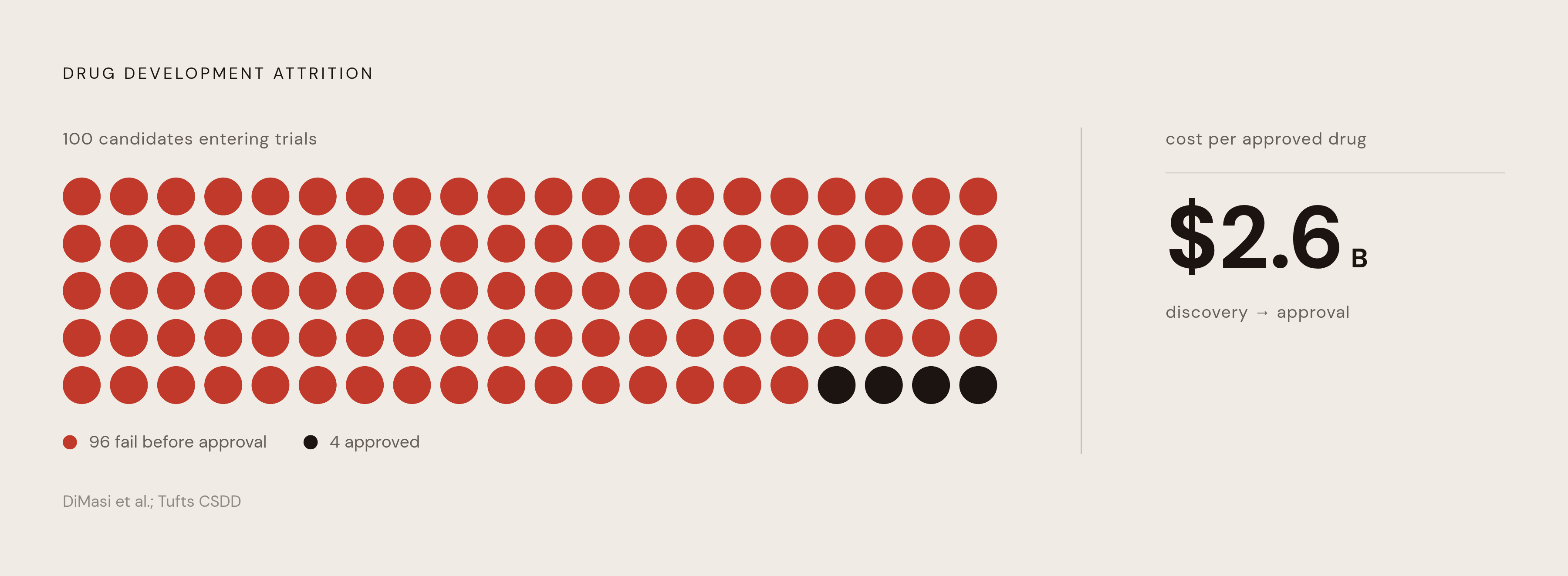
A 2025 PMC review, citing Kumar and Roy, and Hanchard, found that drug candidates have a 96% attrition rate in the pharmaceutical industry, and it costs $2.6 billion to get one compound from discovery to approval. Those two numbers are the whole reason digital twin technology exists in drug development at all. This piece traces what a digital twin actually is, how the models get built, where they're working in the preclinical pipeline right now, and where the technology still runs into walls that no amount of computing power fixes on its own.
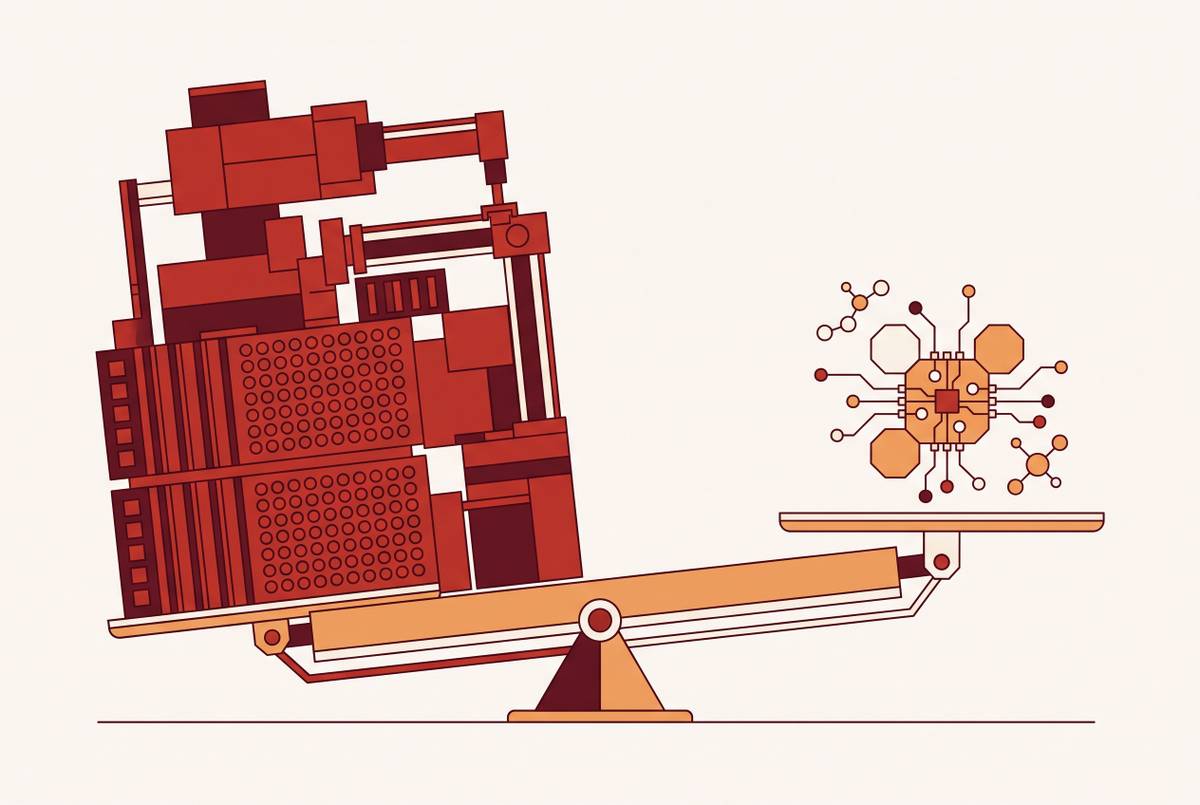
Begin with the failure rate, as it deserves some reflection. A 96% failure rate doesn't mean drug developers are unlucky or careless. It means the tools used to predict human response are mismatched to the problem, structurally, from the ground up. Animal models and lab tests capture just one static biological moment, the experiment’s instant, and that moment never changes, even as disease knowledge advances. A mouse liver isn't a human liver that's just smaller. Differences in how animals process drugs, their receptors, and immune responses can lead to overlooked flaws in lab tests that only appear in human trials, by which time the budget’s gone and the drug’s already dead.
The population problem is almost embarrassingly simple once stated. A single cell line and one inbred rodent strain can’t represent the genetic and physiological diversity of real patients. Preclinical designs evaluate one biological example and generalize to millions of diverse bodies. That's not a modeling failure at the level of bad math. It’s failing to model the right question, even perfectly.
Digital twins are sold as the answer because they offer what static models lack: live data exchange, where the virtual version keeps updating with fresh research or trial findings, while also covering everything from tiny molecular interactions to full-body drug behavior and differences between patients, all in one system. That's their sales talk. The difference between a one-time model that gives a result and a trusted digital twin for regulatory use is huge. Mapping that gap is what the rest of this piece does.
What makes a digital twin different from a computational model or a virtual patient
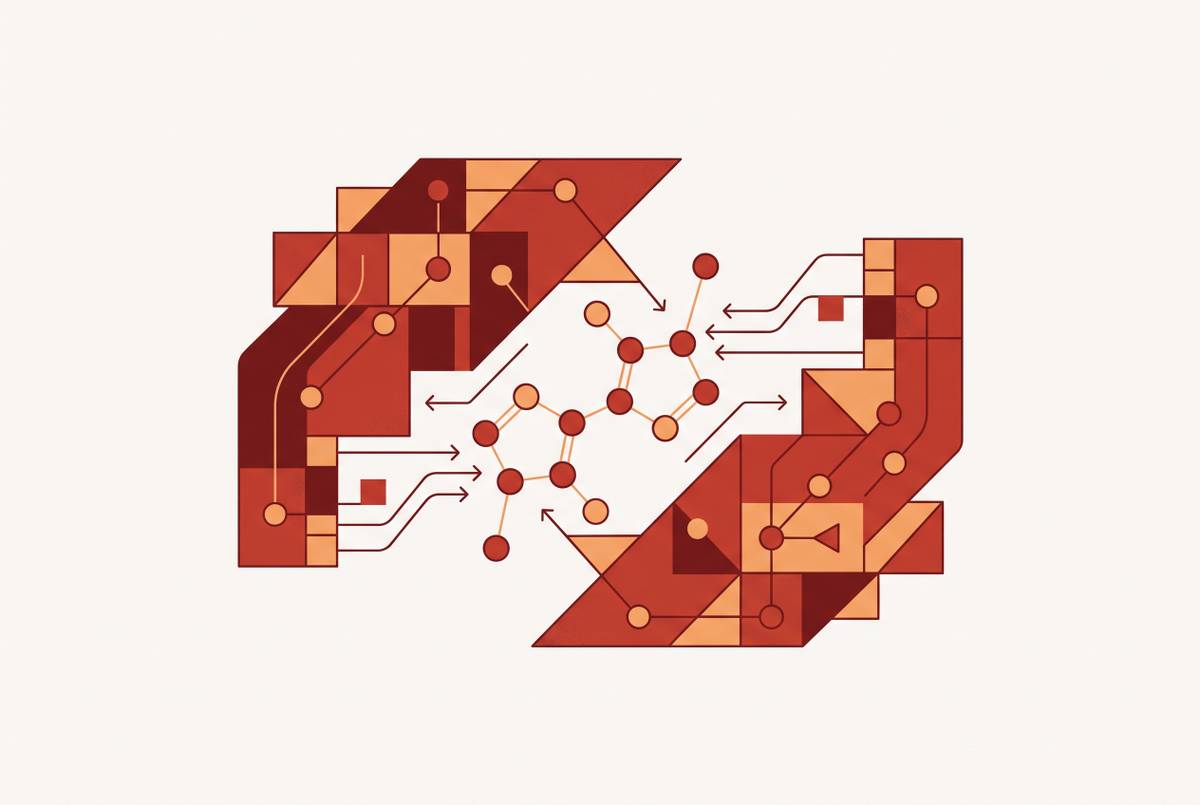
Back in 2002, Michael Grieves defined a digital twin as a physical system, its virtual copy, and a two-way data flow linking them. The two-way flow, that third element, is what matters most. Without that, you’ve just got a simulation. The model stays static, no matter what new data comes in from the lab or clinic. By definition, a digital twin continuously receives updates.
That’s what sets a digital twin apart from a virtual patient, yet people often use the terms interchangeably, blurring the distinction. Virtual patients are statistical models for groups, typically created for a single study and not used again after it ends. A digital twin requires continuous data updates and is tailored to a specific clinical or biological scenario, unlike generic population models. In practice, most of what gets called a "digital twin" in preclinical work sits somewhere in between: a mechanistic model calibrated against experimental data, updated bit by bit as new assay results land on someone's desk.
Three pieces need to be in place before a model earns the "twin" label instead of just borrowing it for a press release. First, biological information: omics data, scans, and drug measurements taken from actual tissue or blood. A second requirement is a computational engine, whether rule-based, data-driven, or both, that replicates the real biology and drug behavior. Third, and often overlooked, is a feedback loop that continually updates the prediction with new experimental or clinical data.
Why is this difference important for those in preclinical work? A PBPK model is valuable when it remains static; no one disputes that. But a PBPK model that refreshes its parameters in real time based on microphysiological system readings, changing itself as new chip data arrives, is functioning like a twin. It’s wrong to treat them as the same just because both give a number. What the model can answer honestly and what it's just guessing at depends on its architecture.
How digital twins are actually built for preclinical drug modeling
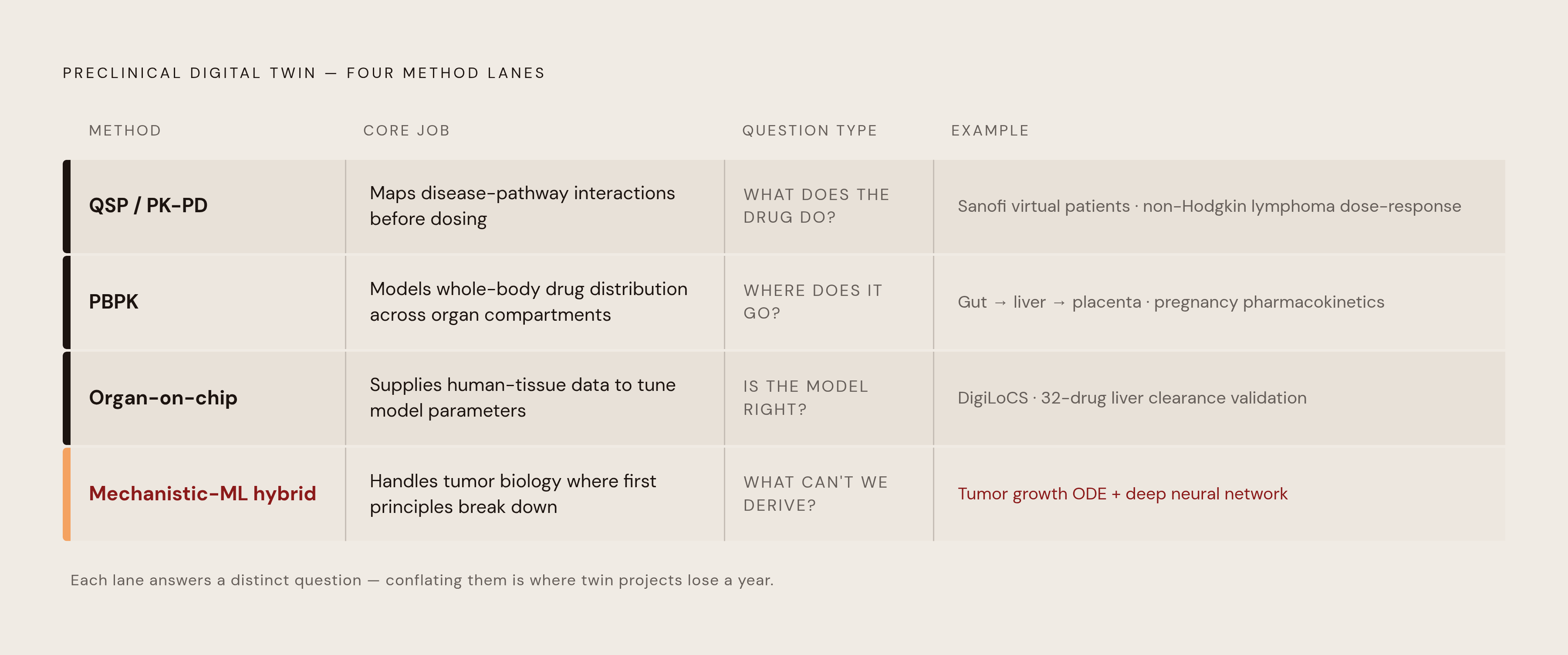
Right now, the field is led by four distinct modeling methods, each tailored to specific preclinical inquiries. None of them works best in every case; they're tools suited to different tasks, and using the wrong one for the question asked is how twin projects often quietly waste a year.
Quantitative Systems Pharmacology (QSP), typically combined with PK-PD modeling, integrates disease biology, pathophysiology, and pharmacology into a single computational framework. It allows researchers to model how a new drug could act within established disease pathways before any dosing choice is made. Sanofi has made this workflow public, constructing QSP-based virtual patients from all available disease and pharmacology data to forecast how a compound interacts with disease drivers. A 2025 Frontiers in Digital Health paper used this method to build personalized virtual patients for mapping dose-response in non-Hodgkin lymphoma, something standard dose-escalation studies can’t do as cheaply.
PBPK models create whole-body pictures using distinct organ sections (heart, lungs, brain, liver, kidney, and others) linked by blood circulation. Each compartment has its own blood flow rate, volume, tissue partition coefficient, and permeability value. PBPK shows its value precisely where animal data can mislead: translating species to humans, understanding pregnancy physiology, and adjusting pediatric doses. In 2025, Frontiers in Pharmacology published a study combining a three-organ gut-liver-placenta microphysiological system with a PBPK model to assess prednisone and prednisolone pharmacokinetics during pregnancy, a scenario current animal models can't honestly replicate.
Organ-on-chip devices produce human-tissue data that digital twin frameworks use to tune their parameters. In January 2025, the DigiLoCS framework, featured in PLOS ONE, used a digital twin model based on liver-on-chip data and in vitro to in vivo extrapolation to forecast liver clearance for 32 drugs. It's described as the largest cross-organ-on-chip platform investigation done to date. Linking gut, liver, and kidney modules lets you simulate how drugs are broken down and moved first-pass, then plug those results into a PBPK model for whole-body exposure estimates.
Oncology has adopted a mixed strategy: mechanistic differential equations model tumor growth, drug pharmacokinetics, and radiation dose-response, while a machine learning layer, like deep neural networks or ensemble methods, searches for patterns in complex data where the underlying biology isn't completely understood yet. They serve distinct purposes. Mechanistic models are clear, allowing a reviewer to understand the reasons behind the model's predictions. The ML layer steps in when first-principles biology can't go further.
One promising advancement to monitor: AlphaFold3 might enable protein-ligand digital twins, with reports in 2025 that it could reduce target validation time from months to days. Whether that timeline holds up beyond the press release is another question, but the trend is clear.
Where digital twins are proving useful across the preclinical pipeline
Finding targets is one of the first successes. Digital twins combining multi-omics data at single-cell resolution with machine learning can forecast a specific cell type's response to a drug candidate, speeding up drug combination testing and enabling drug repurposing. Moingeon's 2023 study showed this in the realm of autoimmune disease. Generative methods, including variational autoencoders and generative adversarial networks, are now part of these twin frameworks to simulate realistic molecular structures and biological responses before any compound is synthesized.
Lead optimization gains are clear: virtual screening simulates molecular interactions before chemists handle lab equipment, while combining structural biology and pharmacokinetic data enables researchers to model binding and pathway effects digitally.
Dosing optimization shows the strongest evidence of effectiveness, and the least guesswork, in this field. A digital twin that combined pharmacokinetics with patient-specific physiological parameters led to a 16% drop in pain intensity and a 23-hour increase in median pain-free time over 72 hours in chronic fentanyl pain management, a 2025 Frontiers in Digital Health study found. A 2025 study found that digital twins using patient data estimated the best doses within 7% of real results, a figure that would catch a regulator's attention. In radiopharmaceuticals, a PBPK digital twin built for [177Lu]Lu-rhPSMA-10.1 in metastatic castration-resistant prostate cancer tailors injected activity and treatment cycles to a patient's unique biodistribution profile, reducing the need for extensive animal testing, according to a 2025 PMC publication.
Toxicity and ADME prediction both rely on structural biology and pharmacokinetics, and the pregnancy and placental pharmacology example in the PBPK section above shows precisely where digital twins fill a gap that animal models can’t bridge, ethically or biologically.
Tumor modeling has revealed an important insight for trial designers: an in-silico solid tumor model that tracks tumor growth, blood vessel formation, and drug delivery showed that high-affinity drugs remained effective no matter when they were administered. This finding directly impacts trial dosing schedules. For population-scale studies, a cohort of 3,461 cardiac digital twins, highlighted in an MD Anderson review as a benchmark for scale in this area, establishes a reference point that tumor heterogeneity researchers are now striving to achieve.
These include neurological and autoimmune uses. Digital twins are being explored in multiple sclerosis modeling to track disease progression and forecast therapeutic responses. A 2025 Frontiers in Digital Health review found that digital twin models correctly predicted neurodegenerative disease outcomes 97% of the time.
The technical obstacles that keep digital twins from becoming routine preclinical tools
Data quality is the silent killer of projects, the one issue nobody wants to discuss in a conference keynote. Digital twins require omics data, imaging, clinical measurements, and time-series pharmacokinetic data simultaneously, and any missing part in that collection reduces the model's accuracy. In reality, preclinical data comes from various instrument platforms, species, biological scales, and labs that rarely communicate. Harmonizing all this data remains an engineering challenge, not a ready-to-use solution. Single-cell data, like that used in the earlier autoimmune twin study, is costly to produce and rarely used in standard preclinical work.
Computational scale is its own headache. Running full-body PBPK models with detailed organ breakdowns is computationally demanding, and the load skyrockets when you expand from a single virtual patient to a full simulated cohort. Certain applications can perform real-time simulations, with sub-millisecond liver response predictions noted in the MD Anderson review, but that quickness isn't consistent across all organ systems. It's a neat feat in a single area, but not something the entire system can do.
Validation is the toughest challenge of the group, and likely the factor that determines if any of this gains regulatory approval. A digital twin must demonstrate its ability to forecast results in biological systems it hasn't encountered before, yet such prospective validation datasets in preclinical drug development remain quite limited. Efforts to compare platforms, like DigiLoCS, the 32-drug liver clearance study, show real progress. A single study, no matter how carefully done, can’t yet stand alone as proof for the whole industry. And that line between models that fit past data well and those with real predictive power often blurs in research reports, making it worthwhile to question, whenever a study boasts strong findings, which one it actually shows.
Understanding the model is the next hurdle. Hybrid mechanistic-ML twins face the same black-box issue that plagues deep learning as a whole. The mechanistic layer assists because it provides a point for reviewers to examine and analyze, yet it does not fully resolve the issue of trust. Both preclinical scientists and regulatory reviewers need to grasp why a twin made a specific prediction, not just what that prediction is.
But even the most advanced twin simplifies the body it represents. Organ-on-chip devices don't replicate the immune microenvironment, hormonal crosstalk, or microbiome interactions present in an actual living body. The more a twin simplifies to be computable, its output relies more on assumptions that may not apply when testing a new compound in an uncharted disease area.
How the regulatory environment is shifting to accommodate, and constrain, digital twins
April 2025 was a major turning point. The FDA took swift action to replace animal testing with New Approach Methodologies, which are advanced lab techniques designed to directly replicate human tissue behavior. Nature saw the FDA's move as paving the way for digital twins and in silico trials, which are virtual simulations of drug responses designed to reduce the need for human testing before approval. That's a meaningful policy signal. It’s not a complete framework yet, and real regulatory reform is still needed before human-relevant methods can scale.
The FDA's January 2025 draft AI guidance offers a risk-based credibility framework for AI tools in regulatory decisions about drugs and biologics. The draft guidance addresses digital twins in the context of AI-generated evidence, yet it doesn’t spell out how twins themselves should be validated. It's a framework created for AI in general, used for twins by inference instead of by design.
The EMA’s 2024 reflection paper takes the same approach in Europe, requiring a clear context-of-use and active risk management before accepting computational model output as evidence. The context-of-use rule is crucial: a twin approved for a specific drug or disease can't automatically apply to another. Regulators won’t take that leap on faith.
A 2026 Nature Medicine article clearly stated the main issue: digital twins and in silico trials require specific regulatory guidance to serve as trustworthy evidence in drug approval decisions, with public sector involvement crucial to ensure safe adoption, not just industry-driven. So, can technology that constantly changes meet a system that relies on one-time, planned evidence? Generic AI credibility checks don’t fit the bill, they’re too broad for a system that needs precision. Neither the FDA nor the EMA has published drug-discovery-specific guidance spelling out what counts as acceptable twin validation, and until that shows up, "digital twin" stays more of a research category than a regulatory one.
Where pharmaceutical companies are actually investing in this technology today
Sanofi has constructed QSP-based virtual patients from available disease and pharmacology data to forecast how a compound interacts with disease drivers. The company openly discusses the process, which is rare enough in the industry to stand out.
Novartis teamed up with Isomorphic Labs, a London AI drug discovery firm Demis Hassabis started in 2021, in early 2024 and broadened that partnership in 2025. The partnership focuses on structural biology and AI-driven drug design, and Novartis is said to have thousands of staff in specific digital and data positions, which shows how much the company is investing in this effort.
In 2023, Genentech, which is part of Roche, began working with NVIDIA on generative AI for drug discovery. Roche then greatly expanded this relationship, announcing in May 2026 the launch of a large-scale AI factory, powered by NVIDIA, to support AI-accelerated drug development organization-wide.
All these actions together show less about one company's plan and more about where the industry believes it has an advantage. No one is investing in digital twins because the technology is complete or fully proven. It clearly isn't, based on everything in the section above. Companies are betting because the alternative, 96% failure and $2.6 billion per approved drug, costs so much that even a partial fix covers its cost. The big question for the rest of this decade is whether regulatory frameworks will catch up to that bet in time.